Fibonacci Sequence
The Fibonacci Sequence is a sequence of numbers created by Fibonacci and involves starting with the numbers and , followed by adding the two previous numbers together to form the next number.
Fibonacci
He is a medieval Italian mathematician, he was born in the year 1170 and died after the year 1240. He is well known for his Fibonacci Sequence; which is often described as a sequence that is intrinsic to nature itself.
Golden Ratio
The Golden Ratio, denoted as Greek letter Phi ( or ), is the ratio observed in the Fibonacci Sequence and is defined algebraically as:
The actual value for the Golden ratio can be calculated through this equation:
The Fibonacci in the World
The Fibonacci Sequence has gained its popularity from its shocking appearances in the fields of nature, music, and many more
Fibonacci in Nature
The Fibonacci Sequence is observed in nature through various examples, below are two examples.
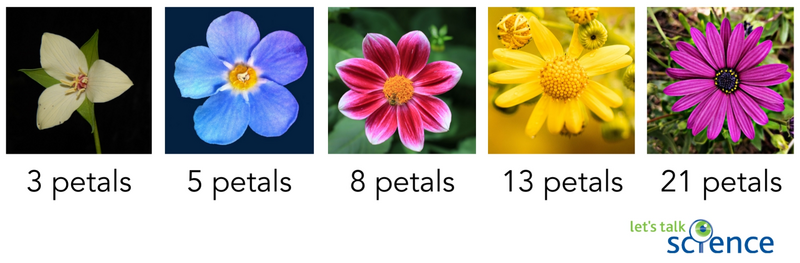
The number of petals in flowers ( especially daisies) are examples of the Fibonacci Sequence in nature because the two most often coincide.
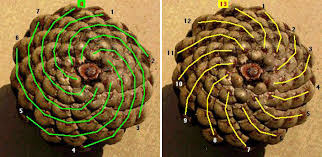
In the example above, the number of spirals observed on a pinecone going in one direction is a Fibonacci number, and the number of spirals in the opposite direction is an adjacent Fibonacci number.
Fibonacci in Music
The Fibonacci Sequence surprisingly appears in the field of music through notable compositions from popular composers such as:
- Bach (1685–1750)
- Beethoven (1770–1827)
- Mozart (1756–1791)